
Challenge
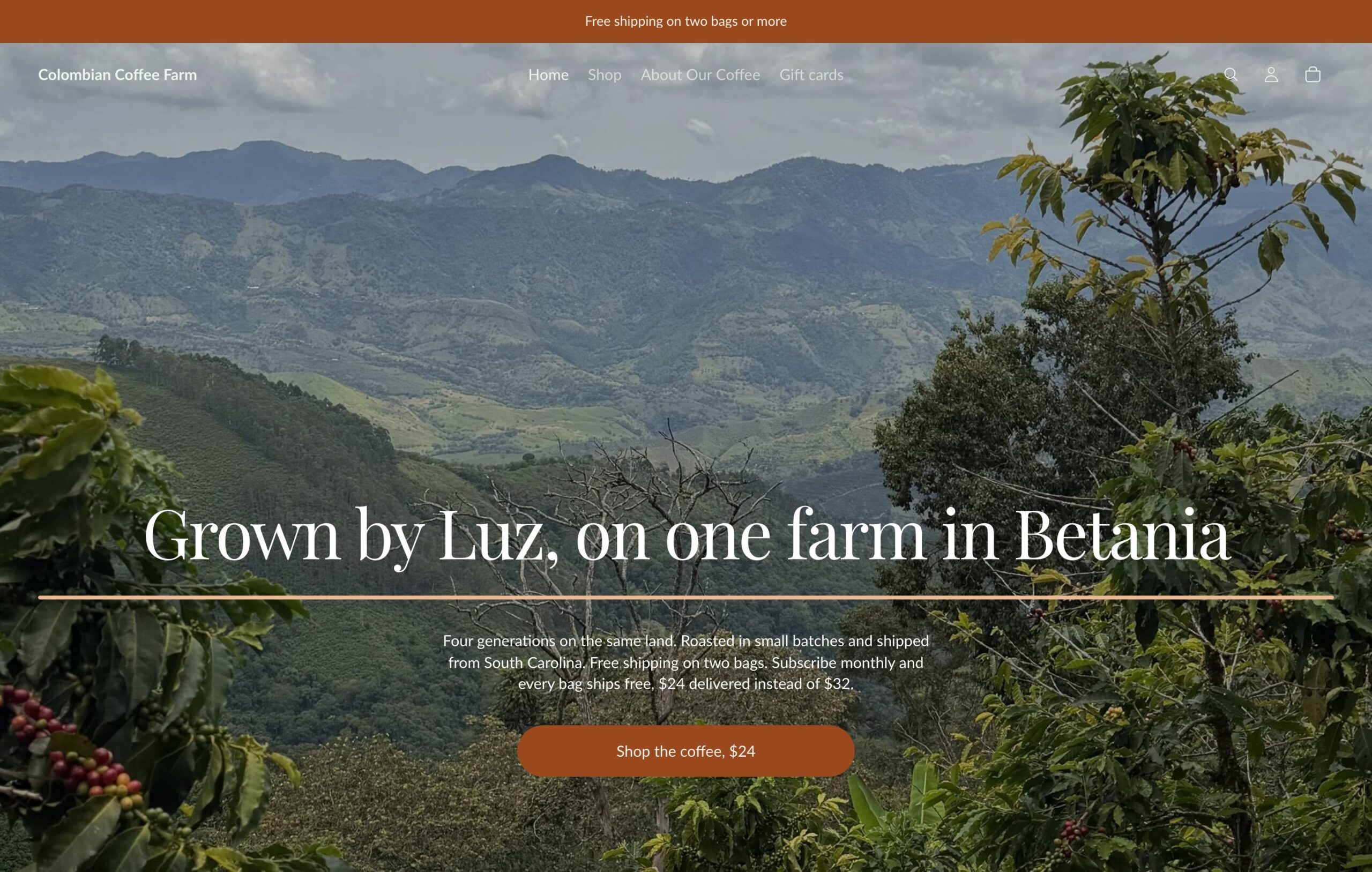
Colombian Coffee Farm sells single-origin coffee grown by one family in Betania, Colombia, through an online store that ships across the United States. The store had visitors and almost no orders: in the 30 days to October 15, 2026, it logged 779 visits, 20 carts, and one real order.
Its Google ads were reporting conversions that matched no sale, and some of them displayed the name of a different company.
Approach
This is a Shopify store, not WordPress, and the work was the same kind I do everywhere: find where the money stops. I diagnosed from the actual Google Merchant Center, Google Ads, and Analytics data rather than from error messages as described, and ruled out three likely suspects before naming a cause: a wrong ads account link, rejected products, and a billing problem.
Delivery
The root cause was a single shared Google account. A Google Business Profile belonging to a different business was connected to the store’s Google sales channel, which is why Google treated an online-only store as having local inventory, and why its ads showed the other company’s name. That profile was disconnected.
The two conversions the ads were reporting turned out not to be sales, so conversion tracking was corrected to count purchases. Campaigns were limited to the United States, where the store actually ships, and product data was corrected from the real packaging, including a valid barcode read off the bag rather than an invented one. A review of the buying path then found the biggest leak: an $8 shipping charge on a $24 bag that buyers saw only at the final step of checkout.
Outcome
The store now tells buyers about shipping up front: free shipping on two bags, and every bag ships free on a subscription. Gift cards, a welcome offer for first-time visitors, and an email signup went live on October 16, 2026.
The other company’s profile is disconnected, conversion tracking counts only real purchases, and campaigns reach only the country the store ships to. At last check, both campaigns had still not served impressions despite a correct setup, and that is the open item being worked now.
Thank you for the report, I agree on it completely. … I agree that shipping is killing us.